

Background
Prior to the 1990’s, Environmental Optical Technologies focused on laser based gear for the scientific and industrial realm. The company focused on various applications such as pollution monitoring, atmospheric studies and other environmental analysis that includes the use of lasers for extremely precise measurements. In terms of holography, or using lasers to develop three-dimensional images, their systems were implemented in medical imaging, water sampling, and chemical composition study to determine the quality of air and any relevant climate data. With most of their testing and research done at the University of Michigan and with home bases in Ann Arbor, it was soon realized that holographic technology could be utilized in firearms development. Steve Barbour, a keystone engineer at the the company, had interests in the tactical and competition world and realized that holographic technology could possibly be used to make more efficient and robust aiming systems. Thus, in 1996, a branch of Environmental Optical Technologies dubbed EOTech was born.
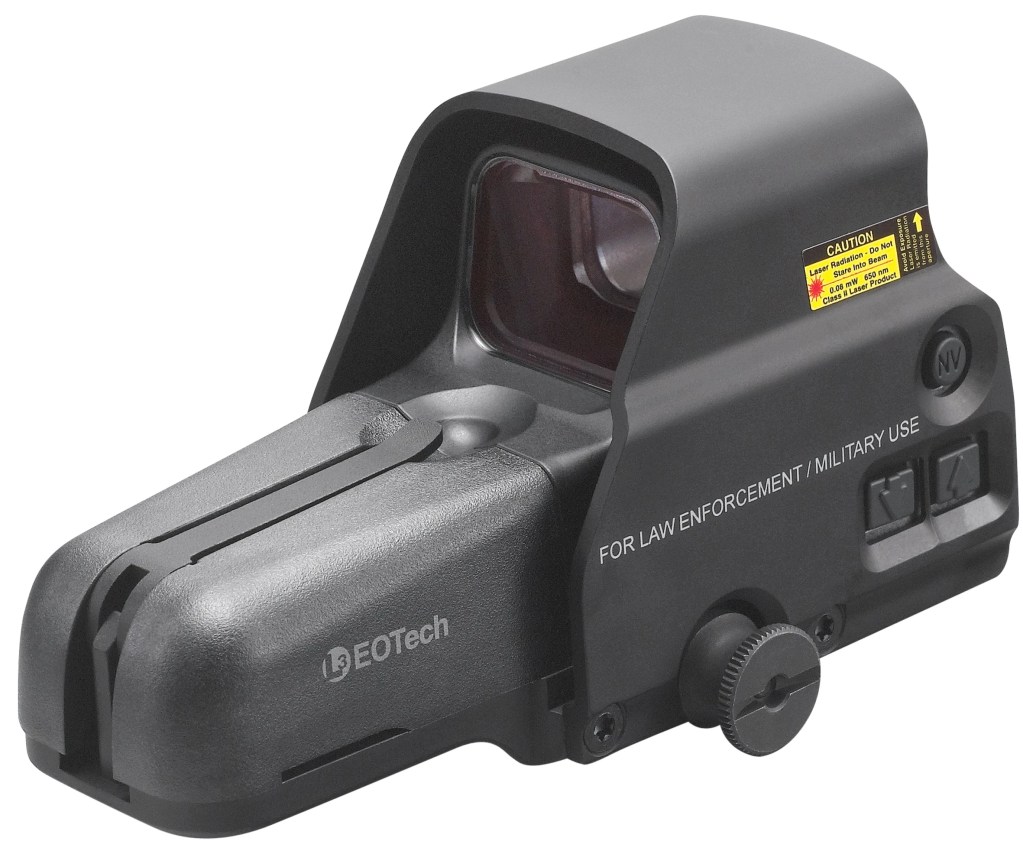
First Products and Testing
The HWS (holographic weapon sight) was the initial product that began to revolutionize the world of firearm tech. While holography and weapon sights wasn’t entirely brand new, other platforms were only suitable for aviation uses, and scaling one down small enough to fit on a rifle let alone have similar clarity and construction proved a challenge. Although holographic sighting systems research at the Environmental Research Institute of Michigan (ERIM) had been studied prior to the implication of firearms, it never came to fruition for small arms. Unlike a red dot which uses LED’s and a reflection on glass, EOtech projected the red emitter onto a viewing window, offering multiple advantages. Their intentions with the original products, and still to this day, include rapid target acquisition via large window and clear glass, parallax free reticle, and enhanced durability.
Growth and Expansion
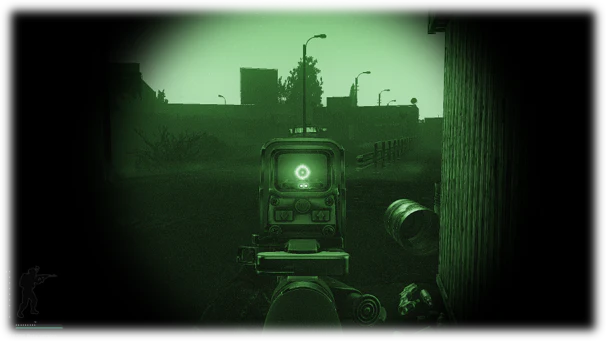
Early 2000s: EOtech’s Model 552 became particularly popular among special operations forces due to its advanced holographic technology. This model offered night vision compatibility, which was crucial for nighttime and low-light operations.
2001-2002: Around this period, SOCOM began incorporating EOtech holographic sights into their standard equipment. The sights were valued for their ability to improve shooting speed and accuracy in dynamic combat environments.
2004-2005: By this time, EOtech sights were widely used across various SOCOM units, including Navy SEALs, Army Rangers, and other elite forces. The adoption was part of a broader effort to equip special operations units with the most advanced and effective gear available.

In 2005, EOtech was acquired by L-3 Communications, a major defense contractor, which later became L3 Technologies. This acquisition allowed EOtech to leverage additional resources and expertise to further develop their product line and expand their market reach. EOtech rapidly gained a reputation for innovation and quality, leading to widespread adoption of their sights by military, law enforcement, and civilian shooters. The U.S. military’s special operations units were among the early adopters, recognizing the benefits of the holographic sights in combat scenarios.
As the company grew, EOtech expanded its product line to include various models tailored to different applications and user preferences. They introduced models like the EXPS and XPS series, which featured compact designs, improved battery life, and enhanced performance.
Why it was chosen for SOCOM
Reticle Design: EOtech sights use a holographic reticle, which is often a 65 MOA circle with a 1 MOA center dot. This design allows for quick target acquisition with the outer ring while providing precision aiming with the center dot.Field of View: EOtech sights generally offer a wider field of view compared to tube-style red dot sights. This can enhance situational awareness and make it easier to track moving targets.Parallax-Free: Holographic sights are parallax-free, meaning the reticle remains on target regardless of the shooter’s eye position. This can improve accuracy in dynamic shooting situations.Durability: Modern EOtech sights are designed to withstand harsh conditions, including extreme temperatures, shocks, and moisture. Unprecedented night vision compatibility and the reticle options in conjunction with a large viewing window are the primary reasons both competition shooters and people who carry a gun for a living choose the optic system.

Why it works for civilians
Civilians and regular dudes have the unique opportunity to obtain the latest and greatest when it comes to the firearms market and anyone who beats on their guns can make use of the EOTech lineup. If you care about clarity, robustness, and are a frequent night vision user or competitor, there is much validity to purchase.

Leave a Reply